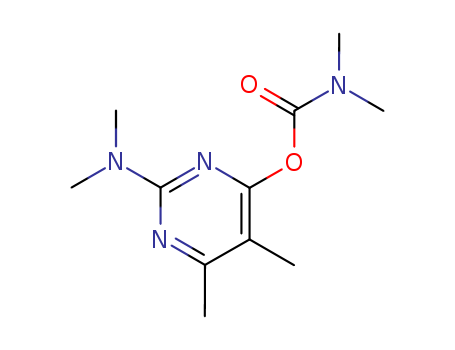
- CasNo23103-98-2
- Purity99%
Location:Home > Agrochemicals
Pirimicarb Good Supplier In Bulk Supply High Purity 23103-98-2
- Molecular Formula:C11H18N4O2
- Molecular Weight:238.29
- Appearance/Colour:white crystal
- Vapor Pressure:8.99E-06mmHg at 25°C
- Melting Point:90.5°C
- Refractive Index:1.548
- Boiling Point:373.4 °C at 760 mmHg
- PKA:4.34 (weak base)
- Flash Point:179.6 °C
- PSA:58.56000
- Density:1.146 g/cm3
- LogP:1.21980
Pirimicarb(Cas 23103-98-2) Usage
|
Health Hazard |
Highly toxic insecticide by oral and possibly other routes of entry; cholinesteraseinhibitor; median oral lethal doses in experimental animals ranged at 100–150 mg/kg;toxic symptoms include excessive salivation,lacrimation, slow heartbeat, blurred vision,headache, muscle twitching, tremor and convulsion; gastrointestinal effects include vomiting, nausea, abdominal pain, and diarrhea;severe poisoning can progress to death.LD50 oral (rat): ~50 mg/kgLD50 oral (dog): 100 mg/kg. |
|
Trade name |
ABOL?; AFICIDA?; APHOX?; FERNOS?; PIRIMIKARB; PIRIMOR?; PP 062?; PYRIMOR?; RAPID? |
|
Potential Exposure |
Primicarb is a carbamate (N-methyl) insecticide. Originally registered in the United States for non-food use on alfalfa grown for seed in selected. Elsewhere it is used on a wide range of cereals, potatoes, fruits, vegetables and other crop |
|
Metabolic pathway |
The influence on the qualitative photochemical behavior of pirimicarb which leads to the photoproducts N-formylpirimicarb and demethylpirimicarb is modified by the waxes that are extracted from nectarines, oranges, and mandarin oranges. The formation of the photoproducts is hindered by the waxes. |
|
Shipping |
UN2811 Toxic solids, organic, n.o.s., Hazard Class: 6.1; Labels: 6.1-Poisonous materials, Technical Name Required. |
|
Degradation |
Pirimicarb is hydrolysed in alkaline solutions (PM). Sterilised buffer solutions of unlabelled pirimicarb at pH values of 4,7 and 9 were incubated in the dark at 50 °C for 5 days. Samples were taken and analysed by HPLC. No hydrolysis of pirirnicarb was detected. At longer incubation times, some of the N-formyl derivative (2) (see Scheme 1) was produced (PSD, 1995). [14C-pyrimidinyl]Pirimicarb was dissolved in buffer solutions of pH 5,7 or 9 and exposed to natural sunlight (August in southern England) for up to 27 days. Losses of radioactivity by volatilisation were insignificant. After 3 weeks virtually all the pirimicarb was degraded. In neutral and acid solutions the main product was the N-formyl derivative (2). At pH 9 this was unstable. The N-monodemethylpirimicarb (3), aminopirimicarb (4) and the pyrimidinol(5) were also identified and some polar products were formed. A further study under similar conditions (August 1974) afforded compounds 14 and the pyrimidinol derivatives (5, 6, 7). N,N-Dimethylguanidine (8), N-methylguanidine (9) and guanidine (10) were identified by electrophoretic methods. The guanidines were formed by opening of the pyrimidine ring (PSD, 1995). These pathways are illustrated in Scheme 1. In other studies in which aqueous solutions or solid samples of pirimicarb were exposed to sunlight or lamps in the laboratory, the products 2, 3, 4 and 5 were also found, the first usually being the major product. Pirisi ef al. (1996) also detected a formylaminodimethylcarbamate (11) whilst Romero et al. (1994) reported that the formaminopyrimidinol (12) was formed via the N-formyl compound (2). [14C-pyrimidinyl]Pirimicarb was applied to a silty-clay loam on a thin-layer plate coated with soil. The plate was exposed under polythene to sunlight in southern England. Pirimicarb was completely degraded over 20 days. The major degradation product was the pyrimidinol (5) formed by hydrolysis of the carbamate ester group. No volatile products were detected (Hill, 1976; PSD, 1995). |
|
Incompatibilities |
May react with strong oxidizers such as chlorates, peroxides, and nitrates. May form explosive materials with phosphorus pentachloride. |
|
Definition |
ChEBI: An aminopyrimidine that is N,N,4,5-tetramethylpyrimidin-2-amine substituted by a (dimethylcarbamoyl)oxy group at position 4. |
|
Agricultural Uses |
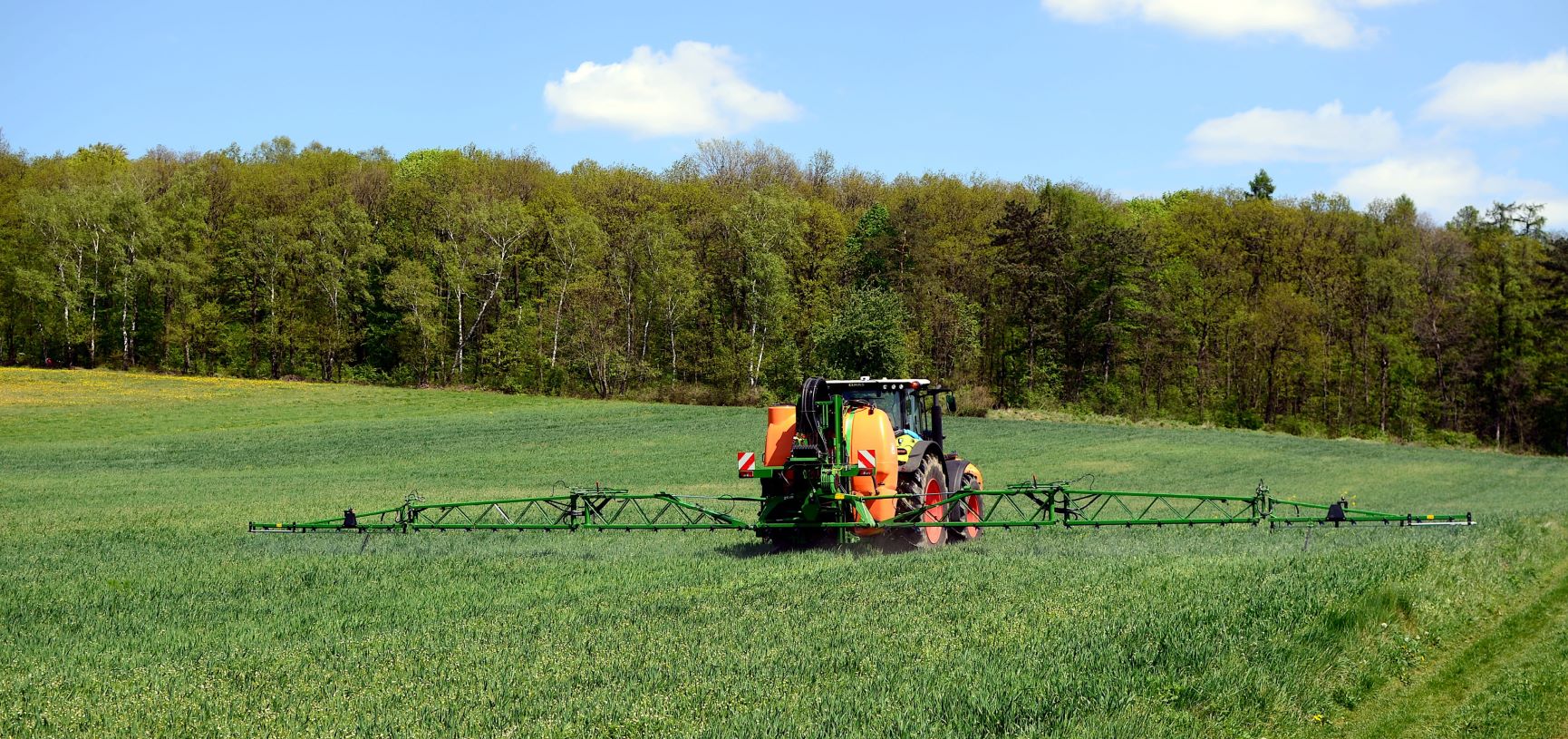
Insecticide: Originally registered in the U.S. for non-food use on alfalfa grown for seed in selected. Elsewhere it is used on a wide range of cereals, potatoes, fruits, vegetables and other crop. |
InChI:InChI=1/C11H18N4O2/c1-7-8(2)12-10(14(3)4)13-9(7)17-11(16)15(5)6/h1-6H3
23103-98-2 Relevant articles
SYSTEM FOR PROTECTING GOODS DURING TRANSPORT
-
, (2013/02/28)
A system for protecting stored goods in ...
Active agent combinations
-
, (2008/06/13)
The novel active compound combinations o...
Use of citric acid derivatives as pesticidal adjuvants
-
, (2008/06/13)
The invention provides the use as a pest...
Macrocyclic plant acaricides
-
, (2008/06/13)
Compounds of the formula I STR1 in which...
23103-98-2 Process route

-
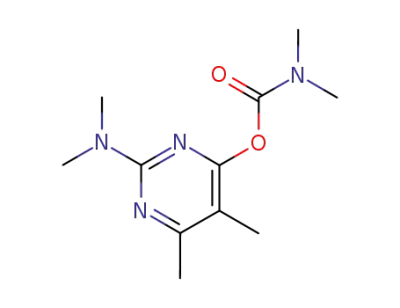
-
23103-98-2
pirimicarb
Conditions
| Conditions | Yield |
|---|---|
|
2-Dimethylamino-5,6-dimethyl-3H-pyrimidin-4-on, Dimethylcarbamoylchlorid, Base;
|
|
|
2-Dimethylamino-5,6-dimethyl-3H-pyrimidin-4-on, Phosgen, Dimethylamin;
|
|
|
|
|
|
|
|
|
|
|
|
|
-
-
23103-98-2
pirimicarb
-
-
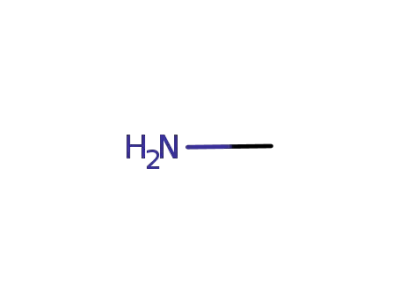
74-89-5
methylamine
Conditions
| Conditions | Yield |
|---|---|
|
aluminium;
In
water; acetonitrile;
Product distribution;
Irradiation;
influence of aluminum foil;;
|
23103-98-2 Downstream products
-
74-89-5
methylamine
-
30614-21-2
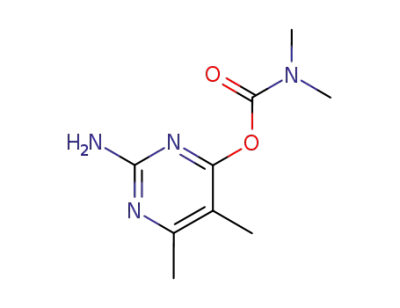
2-(amino)-5,6-dimethylpyrimidin-4-yldimethylcarbamate
-
30614-22-3
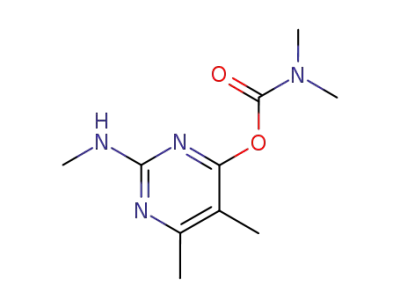
2-(methylamino)-5,6-dimethylpyrimidin-4-yl dimethylcarbamate
-
27218-04-8
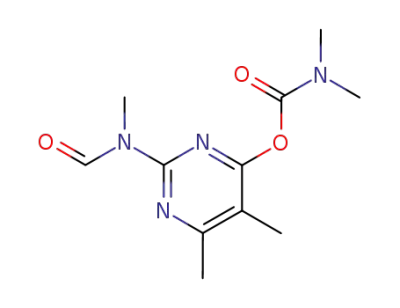
2-<(methylformyl)amino>-5,6-dimethylpyrimidin-4-yl dimethylcarbamate
RELATED PRODUCTS
WANT TO PURCHASE
Please contact us and we will reply to you as soon as possible.